The Chinese five elements — wood, fire, earth, metal, water, or 五行 (wǔxíng) — are five phases of change, not ingredients in a chemistry set. The Shangshu’s Hongfan chapter defines each by what it does: water soaks downward, fire flames upward, wood bends and straightens, metal can be reshaped, earth sows and reaps. Pairing those five with incense is a modern game rather than an ancient Chinese institution, but it is a good game, because every real aromatic drags a trade route, a dynasty and a recipe along with its smell. Play it below — no birth dates, no predictions, no health promises.
What the Five Elements Actually Describe
五行 is closer to “five goings” or “five moving phases” than to “five elements.” The point is motion: each phase names a way things behave, and the whole system is about how one shifts into another.
Later folk culture bundled the five with seasons, directions, colors and tastes — wood with spring and east, fire with summer and south, earth with the center, metal with autumn and west, water with winter and north. That bundling is correlative thinking, a way of sorting the world into groups, and it runs through calendars, city layout, festival food and incense shelves alike. Treat it as culture and play.
The Honest Part: No Ancient Five-Column Manual
We cannot point to a classical incense manual that files every aromatic under an element. The Ming dynasty Xiang Cheng — 28 volumes compiled by Zhou Jiazhuo — organizes material by source, by formula and by story. Earlier Song books, Chen Jing’s Chenshi Xiangpu and Hong Chu’s Xiangpu, work the same way: grades, origins, recipes.
So “wood element incense” is a contemporary idea, a way for modern makers and players to sort scent. It borrows a very old vocabulary; it does not inherit an old rule. Say that out loud and the game gets more interesting, not less.
A Field Guide to the Five Scent Families
Here is one working arrangement — useful for play, invented for play.
| Element | Scent direction | Materials | Notes on origin |
|---|---|---|---|
| Wood 木 | green, sappy, resinous | cypress 柏木, sandalwood 檀香 | cypress grows in China; sandalwood came by sea from India and Southeast Asia, written 栴檀 in Chinese translations of Buddhist scriptures |
| Fire 火 | warm, spicy, smoky | clove 丁香, frankincense 乳香 | both entered China as trade goods |
| Earth 土 | rooty, dusty, faintly sweet | patchouli 藿香, spikenard 甘松 | recorded in the Xiang Cheng and Bencao Gangmu |
| Metal 金 | cool, camphor-clean, sharp | borneol 龙脑, benzoin 安息香 | later sources associate borneol with the land of Poli; supply shipped from Sumatra and Borneo |
| Water 水 | balsamic, deep, almost liquid | storax 苏合香, linglingxiang 零陵香 | recorded in Ming incense compendia |
The import column is the real story. When the Tang monk Jianzhen sailed for Japan, the cargo listed in the Tang Dahe Shang Dongzheng Zhuan included agarwood, borneol, spikenard, benzoin and frankincense alongside the scriptures — a monk’s luggage that read like a spice merchant’s manifest.
Agarwood, Handled Carefully
Agarwood (沉香) is the resinous wood that forms when a tree is wounded, and it sits behind the most quoted stories in Chinese incense. Ding Wei wrote his Tianxiang Zhuan while exiled to Hainan, grading the island’s agarwood by origin and quality. Su Shi gave his brother a mountain-shaped agarwood piece for a birthday, then wrote the Chenxiang Shanzi Fu about it.
We keep agarwood in the history section on purpose: several agarwood species are CITES-listed, wild supply is under pressure, and this page is not a buying guide.
How to Play the Pairing Game
Answer the six questions in the block at the end. Each answer adds a point to one element; the highest total is your scent family. Then build a formula by hand — three to five materials, everything adding to 100 percent.
Name it the old way: a weather image plus the leading material at its share, like 雨歇·柏子三成, “Rain Pauses, Cypress at Thirty Percent.” Incense writing of the Xiang Cheng era loved that four-six parallel rhythm. The proportions are yours.
Why Incense Was Also a Clock
香篆, the incense seal, is fine powder pressed into seal-script or geometric grooves, lit at one end and burned along a continuous path. Traditional Chinese timekeeping divided the day into 100 ke, so one ke ran about 14 minutes 24 seconds (later systems used 96 ke of 15 minutes), and an incense seal could be shaped to burn through a set number of ke.
That changes how a five-element blend feels. You are not only choosing a smell; you are choosing how long an evening lasts.
Smoke in Real Rooms
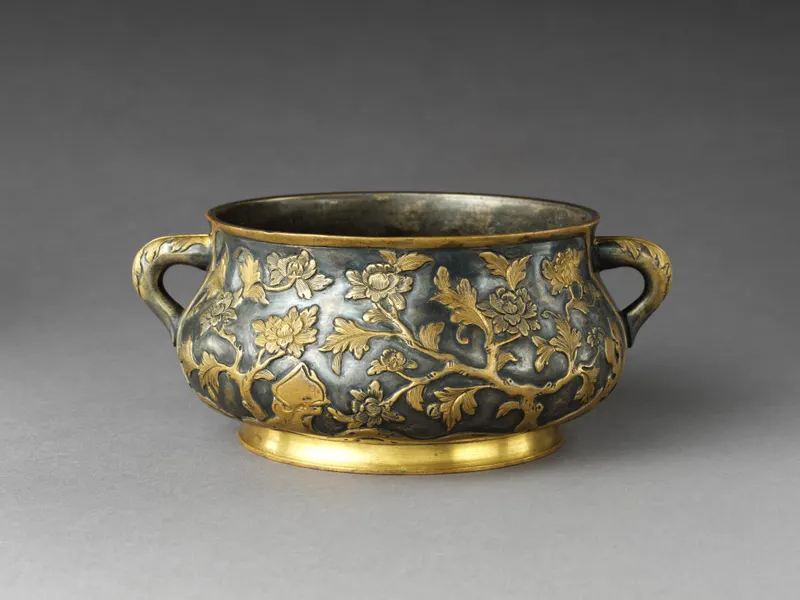
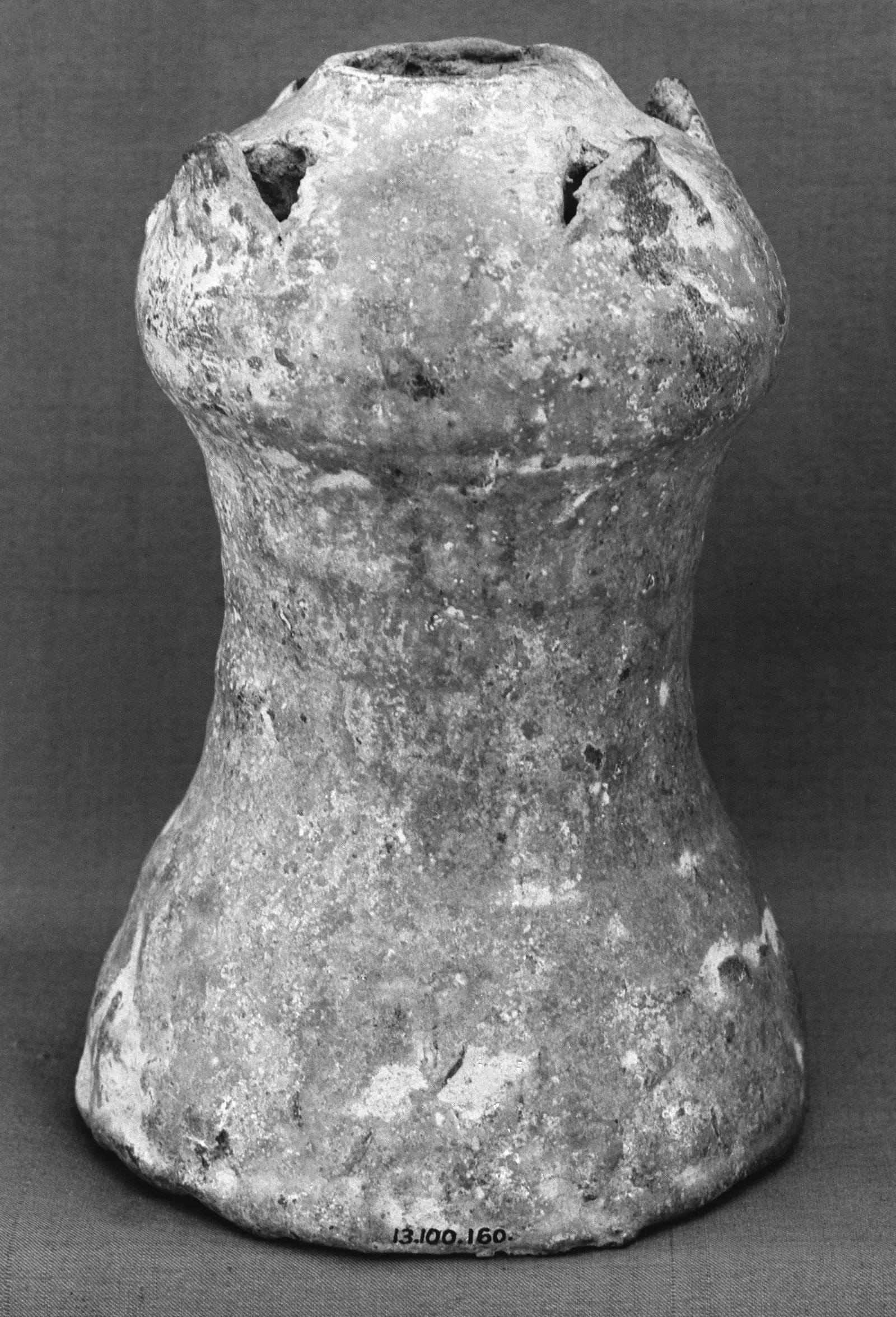
Han censers show where all this sat. The gold-inlaid boshanlu from the Mancheng Han tomb, now in the Hebei Museum, has a cover of mountain peaks and cloud scrolls, usually read in relation to ideas about immortal mountains, though scholars still argue the specifics. The Xijing Zaji describes craftsman Ding Huan’s nine-tiered boshan censer, pierced with strange birds and beasts.
By the Song dynasty the habit had moved into city life. The Mengliang Lu, a Southern Song portrait of Hangzhou, groups burning incense, whisking tea, hanging paintings and arranging flowers as the “four leisure pursuits” (四般闲事), in the context of the city’s specialist service trades rather than as a badge for scholars.
Good Manners with Smoke
Burn incense in a ventilated room, never leave it unattended, and keep it away from curtains, children and pets. Burning anything produces smoke; this page is about history and scent, not health.
Two modern notes. Animal materials such as musk and ambergris belong to history here, and contemporary makers use substitutes. And agarwood, however good the stories, stays culture-only on this site until species, source and CITES paperwork can be checked.
Questions, answered
What are the Chinese five elements?
五行 (wǔxíng) — wood, fire, earth, metal, water — are five phases of change. The Shangshu's Hongfan chapter defines them by behavior: water soaks down, fire flames up, wood bends and straightens, metal can be reshaped, earth sows and reaps. In folk culture they group seasons, directions and smells; they are not chemical elements.
Is there an ancient Chinese system that assigns incense to the five elements?
No classical manual we can cite files every aromatic under an element. Ming incense books like the Xiang Cheng — 28 volumes compiled by Zhou Jiazhuo — sort by material, origin and formula instead. Element labels for incense are a modern, playful organizing idea: folk culture, not ancient law.
Which incense materials are not native to China?
Sandalwood, borneol, frankincense, benzoin and storax all came from outside China. Sandalwood traveled by sea from India and Southeast Asia and appears as 栴檀 in Chinese translations of Buddhist scriptures. Later sources associate borneol with the land of Poli, and supply was shipped from Sumatra and Borneo. Native aromatics include cypress.
Do the five elements predict anything about me?
Not here. In this game the elements are a vocabulary for scent and mood, the way you might call a tea bright or deep. Five-element thinking has real history in calendars, city planning and festival custom, but this pairing is culture and play — no predictions, no personality tests, no health advice.
Where does agarwood fit in?
Agarwood (沉香) belongs in the history, not the shopping cart. Several agarwood species are CITES-listed and wild supply is under pressure, so we keep to stories: Ding Wei's Tianxiang Zhuan, written in exile in Hainan, and Su Shi's fu poem about a mountain-shaped agarwood gift for his brother.