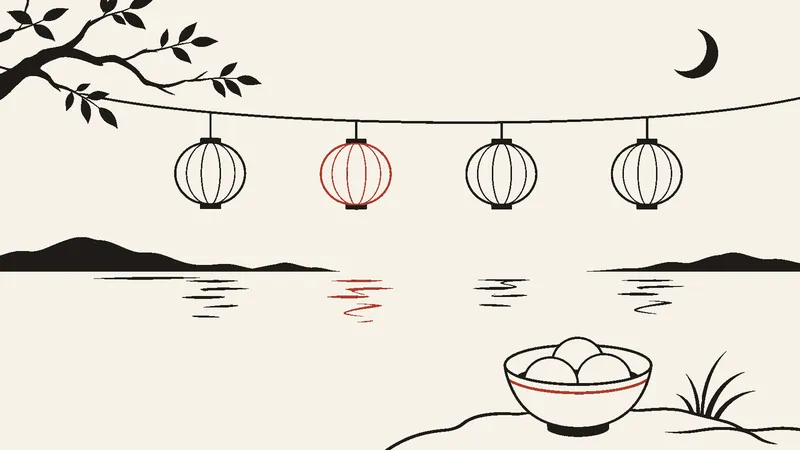
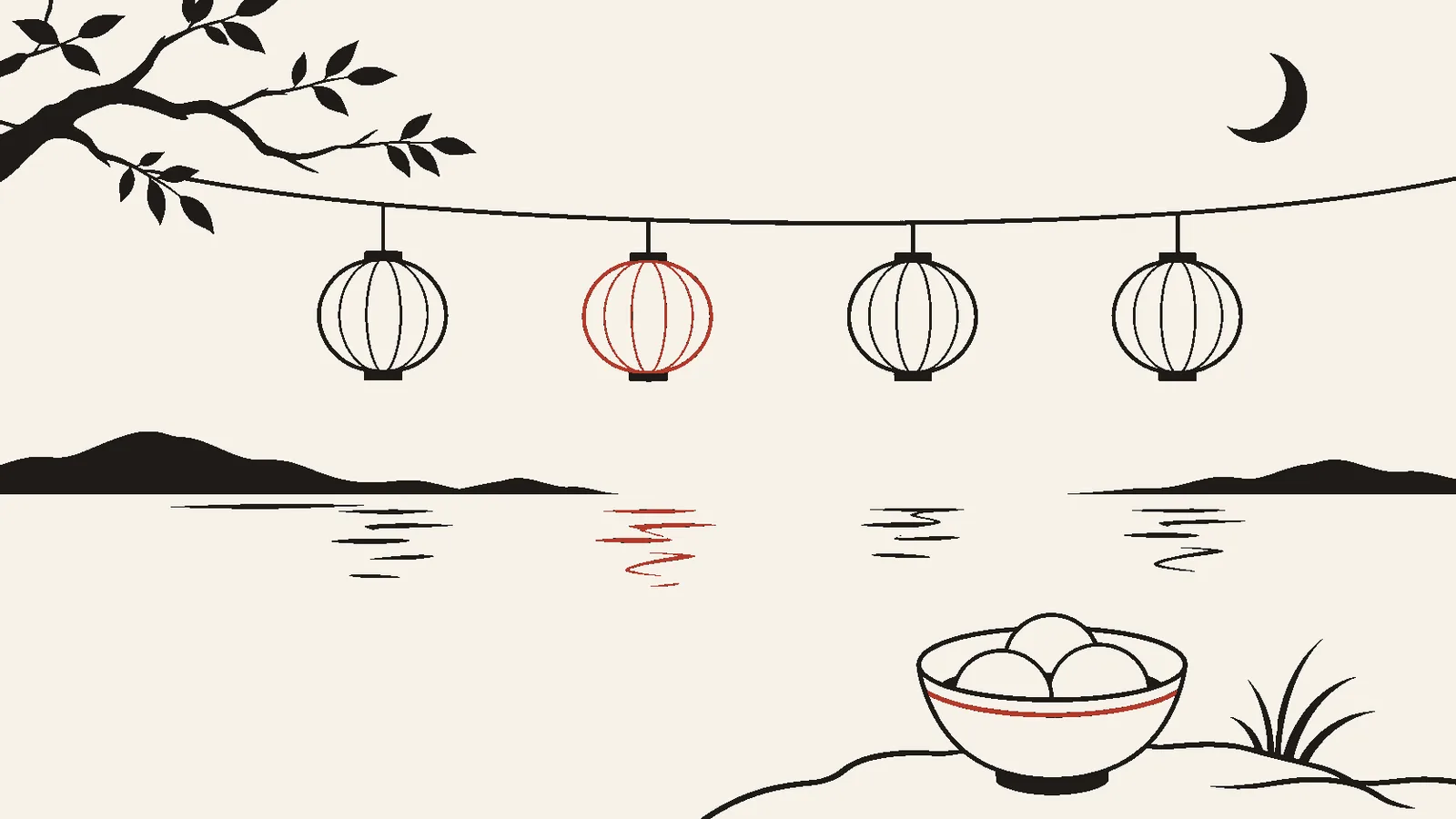
The Lantern Festival 2027 falls on the 15th day of the first lunar month, the closing night of Chinese New Year. It is a night of first-full-moon lanterns, sweet tangyuan, and riddle games. The old customs are historical; the riddles and card games are living folk culture you can join.
What Is the Lantern Festival?
The Lantern Festival is the 15th night of the first lunar month, the first full moon of the lunar year. In the Chinese festival year, it is the last big beat of the New Year season. Families may eat sweet dumplings, look at lanterns, and try a few riddles. It is not a solemn memorial day. The mood is bright, a little noisy, and very social.
The date moves on the Western calendar because it follows the lunar month. In 2027 it falls on Saturday, February 20, two weeks after Chinese New Year on February 6.
The Oldest Layer: A 15th-Night Record
The Jingchu Suishiji records a 15th-night custom: welcoming Zigu to divine the coming year’s silkworm harvest (Jingchu Suishiji). That is a reminder that the festival’s roots are not one neat origin story. They are a bundle of local seasonal practices: moonlight, household ritual, and the hope for a good year.
By the Tang and Song dynasties, lantern displays had grown into a large public celebration. The night was no longer only a courtyard custom. It became a street event with light, crowds, and entertainment. Later sources often describe Song-era lantern displays with lantern mountains and lantern towers, but those details should be checked before repeating them as fact.
Lanterns: From Palace Displays to Kitchen-Table Crafts
Traditional lanterns come in many shapes: palace lanterns, gauze lanterns, running-horse lanterns, and lotus lanterns. A running-horse lantern is especially fun to explain to kids. It uses the rising air from a candle flame to turn a paper wheel, which spins the inner scene. That is a physical principle, not magic. For a safe home model, an LED tea light only provides illumination; to make the inner scene turn, add a separate manual mechanism or a small motor. Do not expect an ordinary LED tea light to drive the paper wheel by itself.
For a home craft, paper lanterns are forgiving. You need stiff paper, a ruler, scissors, glue, and an LED light. Fold, cut, and curl. The goal is not a museum replica. The goal is a lantern that survives the trip from the kitchen table to the front window.
Safety note: real candles and open flames are a poor fit for kids, pets, and dry paper. Use LED lights for indoor lantern crafts. If you see sky lanterns in a video, do not copy it at home; open-flame sky lanterns are restricted in many U.S. jurisdictions for fire safety.
Lantern Riddles: A Word Game You Can Actually Play
Lantern riddles are the festival’s brainy party trick. In the living tradition, a riddle often has a surface, a category, and an answer. It can turn on a split character, a repeated sound, or a classical story. That makes it a cousin of the English riddle, but with Chinese characters as the playground.
Tradition holds that Southern Song lanterns carried “hidden-head” riddles meant to tease passers-by, though the exact historical wording is not settled. Treat the historical detail as tradition, not as a fixed script. The fun today is the same: a little misdirection, a flash of “oh, I see it,” and a lantern that lights up when the answer lands.
If you are writing riddles for an English-speaking party, do not try to translate a Chinese character puzzle word for word. Build a new riddle that works in English. A good riddle card has the riddle, a hint, and a short explanation. The explanation is the teacher. It turns a wrong guess into a small lesson.
Tangyuan and Yuanxiao: The Sweet Finish
Tangyuan are sweet glutinous-rice dumplings. They can be small and plain or filled with sesame, peanuts, or sweet bean paste. In some regions the festival food is called yuanxiao. Tangyuan and yuanxiao are seasonal sweet dumplings with a Song-dynasty lineage.
The texture is the point: soft, chewy rice dough around a sweet center. The flavor is usually nutty, toasty, or bean-sweet. They are often served in a warm sweet soup. This is festival food; label the fillings.
Allergen note: fillings and soups can include peanuts, sesame, or dairy. Check labels and ask hosts. If you are cooking for a group, label the fillings.
Printable Riddle Cards: A Quick Project
Here is a simple printable riddle-card idea for a Lantern Festival 2027 gathering. Use index cards, or print a card template on cardstock. On the front, write a riddle. On the back, write the answer and a short “why” note. Punch a hole in the corner, tie the cards with red string, and hang them near an LED lantern.
Make levels: easy, medium, and “ask the person who loves puns.” Keep the riddles original or public domain. Do not lift modern riddle collections from a book or a website without permission. A small credit line on the back is a good habit.
Original English-friendly riddle cards you can use:
- Front: “I have a face and two hands, but no arms. I tell you when to stop guessing.” Back: “A clock. The face is the dial; the hands point.”
- Front: “I am round, I glow, I hang by a thread. I am not the moon, but I copy its job.” Back: “A lantern. It borrows the moon’s role for one night.”
- Front: “I am sweet, round, and I swim in a bowl. I am not a fish.” Back: “Tangyuan. A glutinous-rice dumpling.”
- Front: “I have a hundred eyes but cannot see. I hang above a crowd.” Back: “A lantern with a patterned shade. The ‘eyes’ are cutouts.”
- Front: “I am a word game with a hidden turn. Guess me and the lantern lights.” Back: “A lantern riddle. The ‘turn’ is the wordplay.”
For a group, add a scorecard: a column for the guess, a column for the hint used, and a column for the explanation. The card set becomes a small party kit. It also gives kids a job: read the riddle aloud, hold the hint card, and flip the answer.
How Chinese Families Actually Spend the Night
The festival is not a single script. In many places, people eat tangyuan, visit a lantern fair, and take photos. In some communities, temple fairs and folk performances are part of the night. In others, it is a quiet family meal and a walk to see lights. The common thread is the full moon and the feeling that the New Year season is closing.
Modern life adds its own layer. Some families watch lantern displays on TV or online. Some schools make paper lanterns. Some towns cancel outdoor fire events because of weather or safety rules. That is normal. Festival culture is not a museum case. It changes with the town, the weather, and the people in the room.
A Note on Legend, History, and Safety
The Lantern Festival has old records, later stories, and modern party versions. Keep them in their lanes. The Jingchu Suishiji gives us an early 15th-night custom. Song-era lantern riddles are often described in later sources, but the exact wording should be checked before it is quoted as fact. The dumplings are festival food; enjoy them as food. The lanterns are light and craft, not a prediction tool.
If you host a Lantern Festival 2027 party, keep it simple: a pot of sweet dumplings, an LED lantern, and a stack of riddle cards. That is enough to mark the night. The first full moon does the rest.
Questions, answered
When is the Lantern Festival in 2027?
It falls on the 15th day of the first lunar month and closes the Chinese New Year period. In 2027 that is Saturday, February 20.
What are lantern riddles?
A festival word game. Riddles can turn on character shape, sound, or a classical story. Tradition holds that Song-era lanterns carried 'hidden-head' riddles, though the exact historical wording is still being checked.
What is tangyuan?
Sweet glutinous-rice dumplings, often filled with sesame, peanuts, or sweet bean paste. They are a seasonal festival food. Check fillings for allergens such as peanuts, sesame, and dairy.
Why do people light lanterns?
The night marks the first full moon of the lunar year. By the Tang and Song, lantern displays were a large public celebration. For home crafts and kids, LED lights are the safer choice.
Can I print my own riddle cards?
Yes. Use index cards: riddle on front, answer and a short 'why' note on back. Keep riddles original or public domain, and add a small 'for fun' note.